Ask a group of landlords what Making Tax Digital 2026 means, and many will picture four extra tax returns a year. The reality is less alarming: the bigger change is keeping records digitally as you go, not paying more tax. Landlords who know whether the threshold applies to them, understand what the quarterly updates really are, and choose a suitable digital system tend to find the 2026 shift far calmer than it first appears.
Who has to report property income digitally from 2026
From 6 April 2026, Making Tax Digital for Income Tax becomes compulsory for individuals whose qualifying income from property, self-employment or both exceeds £50,000 a year. Two details of that test regularly catch landlords out.
First, qualifying income is measured gross, before any expenses are deducted. A landlord collecting £52,000 in rent with £20,000 of costs is inside the scheme, even though the taxable profit is far lower. Second, property and self-employment income are added together, so someone with £30,000 of rent and £25,000 of freelance turnover crosses the threshold as well.
Income from employment, pensions, savings or dividends does not count towards the qualifying figure, and property held through a limited company sits outside these rules entirely. For the first wave, HMRC generally assesses the threshold against the most recent Self Assessment return, so the 2024/25 figures determine who must join in April 2026. The official GOV.UK guidance for sole traders and landlords explains exactly how the test is applied.
The mandate then widens: the threshold is set to fall to £30,000 from April 2027 and to £20,000 the year after, bringing many more landlords into the scope of digital property income reporting over the following two years. Checking the gross figure now, rather than the net profit, tells you which wave you are in.
How quarterly reporting and the end-of-year statement actually work
Under MTD, record keeping becomes a continuous habit rather than an annual reconstruction. Income and expenses are logged digitally as they arise, and four times a year the software totals them into a summary for HMRC.
Two points remove most of the fear here. Quarterly updates are cumulative: each one covers the period from the start of the tax year, not an isolated three-month slice. If a repair bill was missed or a figure needs correcting, the adjustment simply flows into the next update. And a quarterly update is not a tax bill. It is a categorised summary of rental income and costs; HMRC does not turn it into a demand for payment, and no reliefs or allowances are settled at that stage.
For the 2026/27 tax year, the quarterly update deadlines are 7 August 2026, 7 November 2026, 7 February 2027 and 7 May 2027, giving landlords a predictable reporting rhythm throughout the year. And if a filing date does slip, it is worth knowing what landlords should do if they missed the Making Tax Digital deadline rather than letting the problem roll into the next quarter.
The final calculation happens separately, in the year-end submission. This is effectively the tax return under the new system: landlords confirm their figures, claim reliefs such as the £1,000 property allowance where it helps, declare any other income and see the actual tax position. It is due by 31 January following the end of the tax year, the same date Self Assessment filers already know. In practice, the quarterly rhythm spreads the January workload across the year instead of adding four new tax returns on top of it.
Moving from spreadsheets to digital record keeping
Many landlords already keep tidy spreadsheets, so the natural question is whether that habit can simply continue. The honest answer is: partially. HMRC’s rules require records to be kept digitally and the figures to reach HMRC through compatible software with the required digital links. Manually re-typing spreadsheet totals into a form does not meet that standard on its own; spreadsheets can remain part of the workflow only where they connect properly, for example through bridging software.
The practical route for most landlords is to move the records themselves into MTD-compatible software and let the spreadsheet retire gracefully. Modern tools accept CSV imports, so an existing workbook can usually be brought across in one step rather than rebuilt from scratch. From then on, the work is little and often: log rent when it arrives, photograph receipts for repairs and fees, and assign each entry to the categories the quarterly summaries are built from.
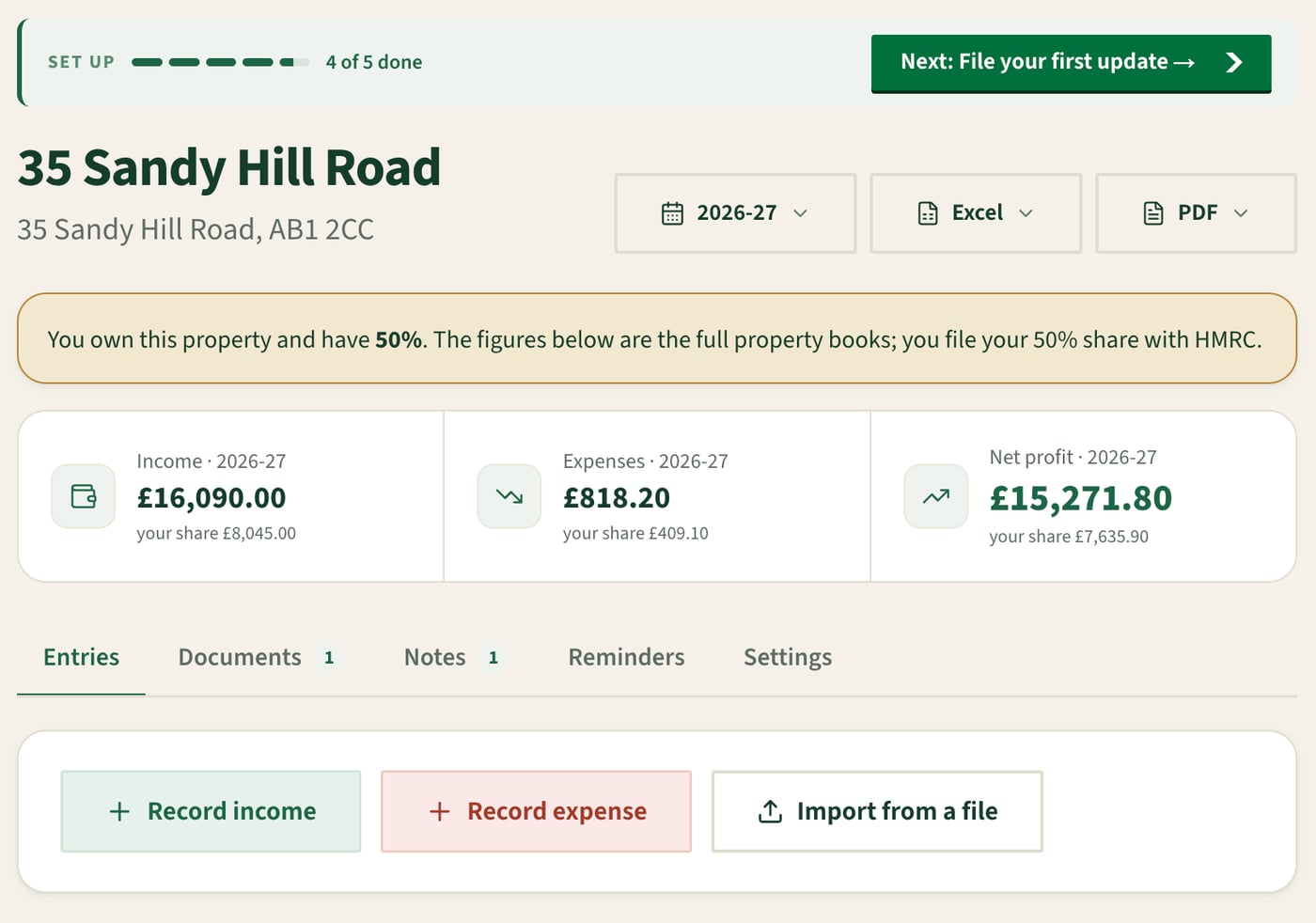
That shift in timing is where the stress actually disappears. A landlord who spends a few minutes a week on records arrives at each quarterly update with the figures already totalled, instead of facing a shoebox of paperwork four times a year.

Short-term lets and mixed property income under the new rules
Income from ordinary short-term and holiday lets generally falls within the property-income side of the MTD rules in the same way as income from traditional residential letting. The income counts towards the qualifying threshold in the same way, and there is no separate, softer regime for short-term accommodation.
The main practical trap is how platform payouts are recorded. Platforms transfer earnings net of their commission, but HMRC expects to see the gross income with the platform fees shown as expenses. Recording only the net amount that lands in the bank understates turnover and can distort both the threshold test and the quarterly summaries. Most platforms provide earnings reports that break this down, and importing those reports is far safer than working from bank statements.
It is also worth noting that the old furnished holiday lettings regime, which gave qualifying holiday lets special tax treatment, was abolished in April 2025, so earlier assumptions about FHL advantages should not be carried into MTD planning.
Two further situations deserve professional advice rather than guesswork. Joint owners each consider their own share of the qualifying income, so married couples and co-investors may each have their own MTD reporting obligations. And anyone with mixed income – employment, dividends, foreign property or a company alongside the rentals – should check how the pieces fit together, because MTD for Income Tax does not treat every source identically.
Simplifying landlord tax compliance through the right digital tool
With the rules clear, the remaining decision is the software itself. The HMRC software list on GOV.UK sets out the recognised products, and three criteria narrow the choice quickly for private landlords: the tool should be built for property income rather than general business accounts, it should be usable without accounting knowledge, and it should work alongside an accountant where one is involved rather than forcing a choice between the two.
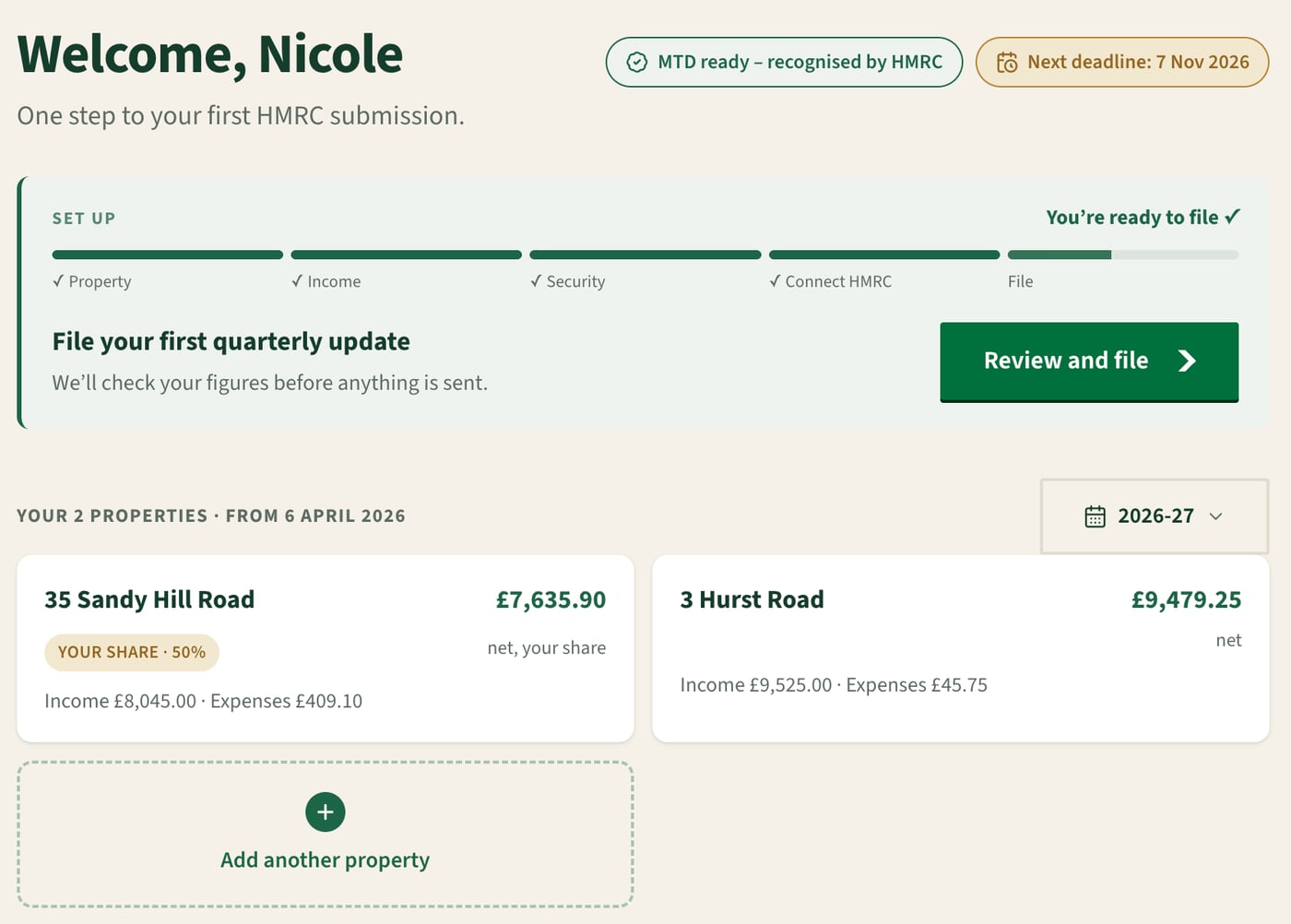
Much of the MTD software market grew out of corporate bookkeeping packages, which can feel heavy for someone with two or three rentals. HMRC-recognised software from Quarterwise takes the opposite approach: it is designed specifically for UK landlords with smaller portfolios, in plain English and with a deliberately simple interface. Rent and expenses are recorded property by property, receipts can be photographed and filed against the right entry, and existing spreadsheets import via CSV. Each quarter the software totals the figures into the summary HMRC requires, and after a quick review the landlord approves it and the update goes straight to HMRC. Keeping the records and submission process within the same digital workflow also reduces the need to copy figures manually between systems, helping to save time and lower the risk of data-entry errors. At year end the tax return is filed the same way.
Hosts with short-term lets can import earnings reports from Airbnb, Vrbo and Booking.com, with income recorded gross and platform fees captured separately in the way HMRC expects. For landlords who still use an accountant, records can be exported as a PDF or spreadsheet, so the software slots alongside professional advice instead of replacing it. The first property is free to manage, which makes it easy to test the routine before compliance becomes compulsory.
A calmer way to prepare for the change
The 2026 start date looks less daunting when it is broken into steps. Check the gross qualifying income figure against the threshold. Get the current year’s records into decent shape while there is still time. Trial a digital tool before the first mandated quarter, so the learning curve is over before compliance is compulsory. Then keep the rhythm: record as you go, review each quarterly summary, and let the year-end statement do the final arithmetic.
Making Tax Digital is a genuine change in how landlords work, but it is a change in routine rather than in the amount of tax owed. Those who prepare early are likely to find the new system less stressful than the January scramble it replaces.